
What a Disc Bulge Actually Means - And What to Do About It!
"You've got a disc bulge" is one of those diagnoses that sounds alarming but is frequently misunderstood. If you've recently had a scan and been given this news, here's a clear-eyed look at what it actually means and what your options are.
We have a FREE Disc Bulge guide to download off of our website here
What Is a Disc Bulge?
Your spinal discs sit between each vertebra and act as shock absorbers. Each disc has a tough outer ring and a softer inner core. A disc bulge occurs when the outer layer extends beyond its normal boundary — it hasn't torn or ruptured, it's just pushing out further than it should.
This is different from a disc herniation, where the outer layer cracks and the inner material pushes through. Bulges tend to be more diffuse, herniations more focal — and herniations are more likely to cause nerve symptoms like radiating pain, tingling, or numbness down an arm or leg.
What's important to understand: disc bulges show up on MRI in a large proportion of adults who have no pain at all. Finding one on a scan does not automatically explain your symptoms, and it doesn't mean your spine is failing. It means your spine is human.
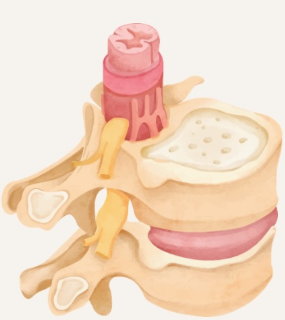
Intervertebral Discs are the cushions of your spine
So Why Does It Hurt?
A disc bulge can cause pain in a few ways. The bulge itself can irritate pain-sensitive structures in the spine. If the bulge is pressing on a nearby nerve root, you may get referred pain or neurological symptoms into the leg or arm. The surrounding muscles often go into protective spasm, which adds another layer of discomfort and stiffness.
The pain is also influenced by load, posture, and movement — which is why some positions feel fine and others are unbearable. Sitting for long periods, certain bending movements, and sustained postures commonly aggravate disc-related pain.
When Should You Be Concerned?
Most disc bulges settle with appropriate conservative care and time. However, some symptoms warrant prompt medical assessment:
- Loss of bladder or bowel control
- Numbness or weakness in both legs
- Progressive neurological symptoms (increasing weakness or numbness that isn't improving)
- Pain following significant trauma
These presentations need investigation before manual therapy or exercise is started.
For the majority of people with a disc bulge — local back or neck pain, stiffness, and possibly some referred pain — conservative management is the appropriate first step.
What Does Conservative Management Look Like?
Evidence consistently supports non-surgical care for disc-related low back pain, including spinal manipulation, targeted exercise, load management, and education about the condition. The goal is to reduce pain, restore movement, and build the capacity to return to normal activity.
At Maylands Healthcare Hub, a chiropractic assessment for disc-related pain includes a thorough history, neurological screening, movement and load testing, and a review of any imaging you've had. From there, care is tailored to your specific presentation — not a generic back pain protocol.
Treatment may involve spinal manipulation or mobilisation, soft tissue work, graded loading and rehabilitation exercises, and practical advice on how to manage the condition between appointments. If your presentation suggests you need imaging, specialist referral, or co-management with another health professional, we'll tell you that directly.
What About Surgery?
The majority of people with disc bulges do not require surgery. Surgery is generally considered when conservative care has been given adequate time and hasn't resolved the problem, or when there are progressive neurological symptoms that aren't improving.
If surgery is indicated, your chiropractor should be part of the conversation and can support pre- and post-operative rehabilitation.
Getting Assessed in Maylands
If you've been told you have a disc bulge and you're not sure what to do next, the most useful thing you can do is have a proper clinical assessment not just go off the scan report.
Maylands Healthcare Hub is at C1/293 Guildford Rd, Maylands. We offer chiropractic care alongside women's health physiotherapy and clinical Pilates, which means if your back pain is part of a bigger picture, we can look at the whole thing.
Book Online or call us on 0402 283 352 to discuss whether chiropractic assessment is the right starting point for you.
---
This article is for general information purposes only and does not constitute medical advice. If you are concerned about your symptoms, please consult a qualified health professional.
